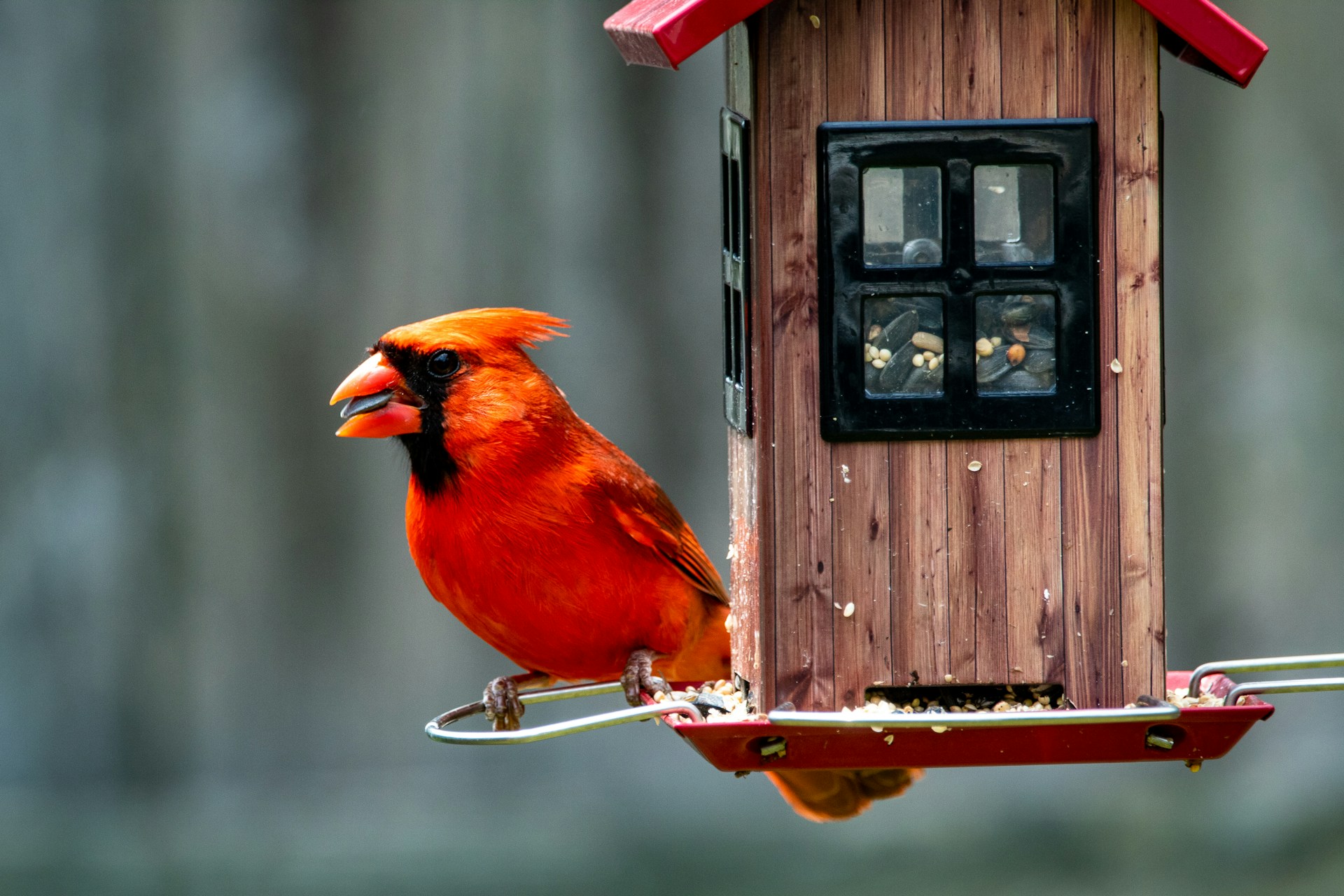
Have you noticed a gradual reduction in the number of birds coming to your feeders, but can’t work out why? Well, if it’s a red or orange colored feeder and has faded over time through exposure to the elements, this could be the source of your problem. While vibrant reds and oranges are often chosen to attract avian species, a surprising phenomenon occurs during the summer months that can turn these bird beacons into turn-offs for your feathered friends.
This article will explain how the intense summer sun causes these particular feeder colors to fade, and why this seemingly innocuous change in hue is so strongly disliked by the very birds we hope to attract. Understanding the science behind color perception in birds, and the practical implications for feeder maintenance, is key to ensuring your backyard remains a welcoming oasis for these most cherished visitors.
How Red and Orange Feeders Fade in Summer

The vibrant red and orange hues of many bird feeders, particularly those designed for hummingbirds and orioles, are specifically chosen because these colors are highly attractive to the target species. However, as summer progresses, backyard bird enthusiasts often notice a decline in feeder visits, and a key culprit can be the fading of these bright colors. This phenomenon is a direct result of UV degradation and has significant implications due to the unique way birds perceive color.
The pigments used in many plastics and paints, especially those producing red and orange, are susceptible to ultraviolet (UV) radiation from the sun. Firstly, when UV rays strike the colored surface of a feeder, the energy from these rays is absorbed by the pigment molecules. Over time, this absorbed energy causes a chemical breakdown of the pigment’s molecular structure. This process is similar to how prolonged sun exposure can fade clothing or car paint.
As the pigment degrades, fewer molecules are available to reflect the intended red or orange wavelengths of light. The result is a loss of color saturation, making the feeder appear duller, paler, or even shifting its hue towards a less vibrant pink or yellow-orange. Summer’s intense sunlight, combined with longer daylight hours, accelerates this degradation process, making the fading much more pronounced than in other seasons.

Why Birds Hate It: The Nuances of Avian Vision
Birds possess a visual system far more sophisticated than our own, and this heightened perception makes faded feeders unappealing. The fundamental way birds see is similar to humans, involving light entering the eye, focusing on the retina, and being converted into electrical signals for the brain. However, birds have several key adaptations that make their vision superior.
Tetrachromacy
Humans are trichromats, meaning our retinas have three types of cone cells sensitive to red, green, and blue light. Birds, on the other hand, are primarily tetrachromats, possessing a fourth type of cone that allows them to see into the ultraviolet (UV) spectrum. This means birds perceive a much wider range of colors than humans, including hues invisible to our eyes.
Colored Oil Droplets
In addition to the four cone types, bird cone cells contain brightly colored oil droplets. These droplets act as filters, refining the incoming light and enhancing color discrimination and contrast. This allows birds to distinguish subtle differences in shades that would appear identical to humans.
High Receptor Density
Birds, especially diurnal (day-active) species, often have a much higher density of cone cells in their retinas compared to humans. This leads to superior visual acuity and the ability to see finer details from a distance.
Rapid Focusing
Birds can change the shape of both their lens and cornea, unlike humans who primarily change only the lens, which allows them to achieve incredibly fast and precise focus shifts. This is crucial for birds hunting in flight or navigating complex aerial environments.
Eye Placement
The position of a bird’s eyes varies by species:
- Laterally placed eyes are common in many ground-feeding birds like pigeons, providing a very wide field of view, often over 300 degrees. This is essential for detecting predators from almost any direction. This comes at the cost of reduced binocular vision.
- Frontally placed eyes, seen in birds of prey like owls and eagles, offer excellent binocular vision. This allows for precise depth perception and distance judgment, critical for hunting prey.
Why Birds are Attracted to Bright Red Colors
Birds are often attracted to bright red colors for several ecologically significant reasons.
Food Source Indication
Red is a common color in nature that signals ripe fruits, berries, and nectar-rich flowers, or even the presence of specific insects. Many fruits turn red when they are mature and full of sugars, making them an attractive and nutritious food source for many birds, like the fruit-eating orioles for instance. Similarly, red flowers often produce abundant nectar, which is a primary food source for hummingbirds and other nectar-feeding birds. The ability to see red vividly, along with UV, helps them locate these food items, which may have UV blooms that further highlight their ripeness.
Sexual Selection and Mate Attraction
In many bird species, particularly males, vibrant red plumage or skin patches serve as a visual signal of health, fitness, and genetic quality. A bright red coloration often indicates a bird’s ability to forage successfully for carotenoid-rich foods (pigments that produce red, orange, and yellow hues) and to process these pigments into their feathers. Females are attracted to these strong displays as they suggest a desirable mate with good genes.
Evolutionary Co-evolution with Plants
Some plants have evolved to produce red flowers specifically to attract birds for pollination. Since many insects do not see red well, red flowers can be a strategy for plants to ensure efficient pollen delivery by birds, while avoiding nectar theft by less effective insect pollinators. Although on average insect species are the most efficient pollinators, this depends upon the species of plant and region: birds’ ability to fly longer distances and their tendency to visit multiple plants of the same species can make them more effective at cross-pollination for instance. This is particularly evident in regions with many bird-pollinated plants, such as Australia. The hummingbird’s role in pollination is particularly noteworthy.

What’s Wrong With Faded Colors On Feeders
As discussed, birds are highly attuned to color for survival and reproduction, and have evolved to associate certain bold hues with readily available and nutritious food sources. Beyond food, bright coloration plays a vital role in avian communication, from attracting mates to territorial displays.
When a feeder’s vibrant red or orange fades, it loses its signaling power for birds. To their superior vision, a faded feeder might no longer register as a food source. Just as a human might avoid a dull or discolored piece of fruit, birds may instinctively shun a feeder that doesn’t exhibit the expected vibrant hues, associating it with something less nutritious or even harmful.
In addition, a faded feeder might blend more easily with the surrounding foliage, making it less conspicuous to birds flying by.

Why They Should Be Repainted With Bright Feeder Colors (or Replaced)
Given the crucial role of color in attracting birds, regular maintenance of red and orange feeders is essential. Repainting or replacing faded feeders restores the bright, saturated colors that birds are naturally drawn to. This immediately increases the feeder’s visibility and makes it more inviting. By maintaining the intended vibrant hues, you are effectively mimicking the natural signals that birds rely on to find food in their environment. This increases the chances of attracting a range of birds to your feeders. If you find your avian friends are no longer visiting your backyard then this is the first thing you should check.

Final Thoughts
In summary, the summer sun’s UV radiation causes a chemical breakdown of pigments in red and orange bird feeders, leading to fading. Due to their tetrachromatic and highly discriminatory vision, birds perceive this fading as a significant change, making the feeders less attractive and potentially unrecognizable as a desirable food source. Therefore, repainting or replacing these faded feeders is a simple yet effective way to ensure your backyard remains a popular and reliable stop for your feathered visitors.