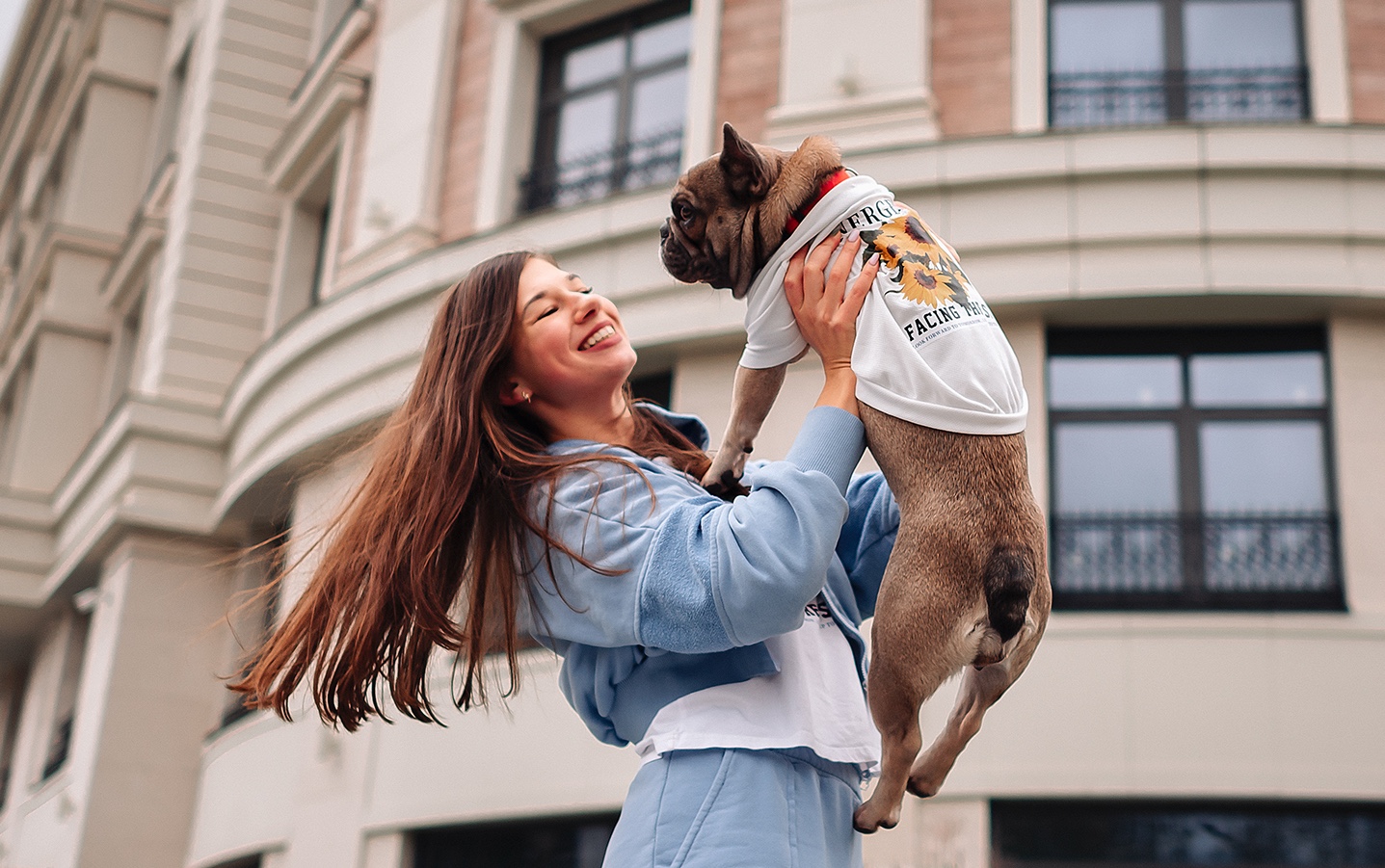

In today’s grooming industry, conversations around ethics, animal welfare, and psychological understanding are more important than ever. But few professionals embody this shift as fully as Daria Roldugina — a grooming expert, certified animal behaviorist, published researcher, and creator of the ZooPsych Grooming methodology. Her work goes far beyond technique: it’s about redefining how humans interact with animals in care environments. In this exclusive interview, Daria speaks about her path from hands-on practice to scientific insight, the values behind her work, and the mission she’s building — one dog at a time.
— Daria, I’ve studied your professional path, and it’s truly unique: you’ve not only achieved success in a practical field but transformed it by integrating grooming, zoopsychology, academic research, business, and education. All of this while building your own brand and developing a methodology that’s already being adopted by other grooming salons. Let’s go back to the beginning — when did you realize that grooming, for you, wasn’t just a craft, but a field for profound professional transformation?
— That realization came gradually — but essentially, I’ve been in this profession since childhood, though I didn’t know it back then. My mother was a dog breeder, my brother became a veterinarian, and I grew up surrounded by love for animals. I helped care for puppies, prepared dogs for shows, observed their behavioral reactions — without even realizing it, I was learning. So for me, grooming isn’t just a job, it’s a family value.
Later, I started asking myself: why is no one teaching groomers to understand animals? Why are we expected to just “hold and trim” without paying attention to the pet’s emotional state? I began studying zoopsychology, behavioral anatomy, worked alongside veterinarians, analyzed my mistakes — and realized that grooming could be something completely different. Mindful. Ethical. Scientific.
Recently, I also became a certified animal behavior specialist through the IAABC, which was another milestone in my journey toward ethical and conscious interaction with animals.
— Your professional bio includes far more than just hands-on work with animals — you’ve published scientific articles, been invited to review academic papers, and collaborate with educational institutions. That’s quite rare in your field. What made you incorporate science into your toolkit, and how do you feel operating in an academic space, considering your roots are in practice?
— My main inner conflict was that I didn’t want to be just a technician. I saw how much of grooming is based on “experience-based authority” that often lacks proven effectiveness. And I’m the kind of person who needs to understand why something works. At some point, I started documenting my observations, recording behavioral reactions, and searching academic literature for explanations. It turned out that my questions had real scientific depth.
I wrote my first article — on working with shelter dogs — and it was accepted by the journal Current Research. Then came others — about salon design and its impact on dogs’ psychological well-being, and the role of grooming in trauma recovery. Today, I feel like I stand at the intersection: I’m still a practitioner, but I now speak to the academic world in its own language — the language of methodology, analysis, and hypotheses.
— On that note, I must ask about your experience as a peer reviewer. You were invited by the international journal Economy and Society to evaluate scientific manuscripts. That’s not just professional recognition — it’s inclusion in an academic community. How did that happen, and what did it teach you?
— It was completely unexpected. They reached out to ask me to review an article on animal behavior, and at first I thought it was a mistake. But I soon realized that my experience was actually valuable to the academic world. I accepted the invitation and soon became a regular reviewer.
Over the past year, I’ve provided expert reviews for articles on topics like ground squirrels, pelican species, and rabies epizootiology in Tajikistan. It gave me an amazing sense of being part of a global scientific conversation. I began to see my methodology not as a “proprietary tool for salons,” but as a part of a much larger system of knowledge about animals, their perceptions, their adaptation, and their emotional welfare.
— In parallel with all this, you’ve built a strong personal brand: your social media is active and widely followed, your blog offers educational and motivational content. But this isn’t entertainment — you’re sharing values around humane animal treatment and ethical practices. Was that a conscious strategy or an organic development?
— It was definitely not a marketing strategy. It was more of a calling. I started posting videos simply to show that there’s another way. That a dog doesn’t need to growl to be heard. That a hairdryer can be turned on across the room, and nail clippers don’t have to be threatening.
People began writing to me: “Thank you, you changed how I view grooming,” or “Because of you, I adopted a dog from a shelter.” That created a sense of responsibility. I now continue the blog not because it’s trendy — but because it’s a platform for spreading important ideas. Yes, it impacts business — about 40% of our clients come through referrals — but that’s secondary. What matters most is spreading the message.
— You founded a successful grooming salon, Multi Groom, and developed your own licensed methodology, ZooPsych Grooming, which is being adopted not just by salons but by shelters, vet clinics, and educational centers. From your perspective, which achievements of this project have had the greatest real-world impact?
— For me, the most important outcomes aren’t numbers — they’re stories. For instance, we had a case of a shelter dog who wouldn’t let anyone near her. After four sessions, she began to trust again. Or the puppies in Kommunarka — we introduced an early adaptation system, and after a month, 80% no longer feared hairdryers or nail trimming.
But if we speak in business terms, the numbers are also strong: 96% of our clients return within six months, and we have a two-week waitlist. The methodology is sold under license — and I’m thrilled that other salons can now offer not just high-quality service, but ethical and mindful grooming.
— All of this clearly comes with immense emotional and intellectual demands. You work with traumatized animals, with aggression, with terrified puppies. You also engage in research and public education. What keeps you grounded and resilient? Where do you find balance?
— In love. I genuinely love what I do. I love these animals — sometimes they come to me with broken minds, sometimes with broken lives. It’s not burnout, it’s empathy. And when I see a dog, once unapproachable, now calmly lying down and looking me in the eyes — I understand exactly why I do what I do.
I’ve also learned to give myself pauses. To go somewhere quiet. To just sit in silence with an animal, without needing to “do something.” That too is a form of work — just being there.
— Daria, let’s imagine that tomorrow you’re offered any international opportunity you want — a research grant, launching your own school, joining a global animal welfare organization. What do you choose?
— Can I pick all three? (laughs) But seriously — I’d start an international online school. One with certification, modular training, accessible to groomers, volunteers, students, and shelter staff. I’m already designing it in my head. It won’t just be about technique, but about mindset. Because if we want humane treatment of animals, we need to start cultivating it from the ground up — in future professionals.
— One final question I love asking people who have transformed their profession from within: What do you think you’ve brought to the grooming field — and what legacy do you hope to leave behind?
— I want grooming to stop being seen as just a “technical trade” and to become a capital-P Profession. One with science, ethics, responsibility, and deep understanding of animal behavior. I want future groomers to be trained not only in “how to clip,” but in “how to understand.” I want every pet to feel that here, they are respected — that someone sees them, listens to them, honors their signals. If that happens — then I’ve done something right.
Daria Roldugina’s journey proves that grooming is not merely about aesthetics — it’s about trust, science, and care. Through her licensed methodology, research contributions, and educational outreach, she’s helping reshape the field for a new generation of professionals who treat animals not just as clients, but as sentient partners. Her story is a powerful reminder that when compassion meets expertise, transformation becomes inevitable — both in practice and in principle.