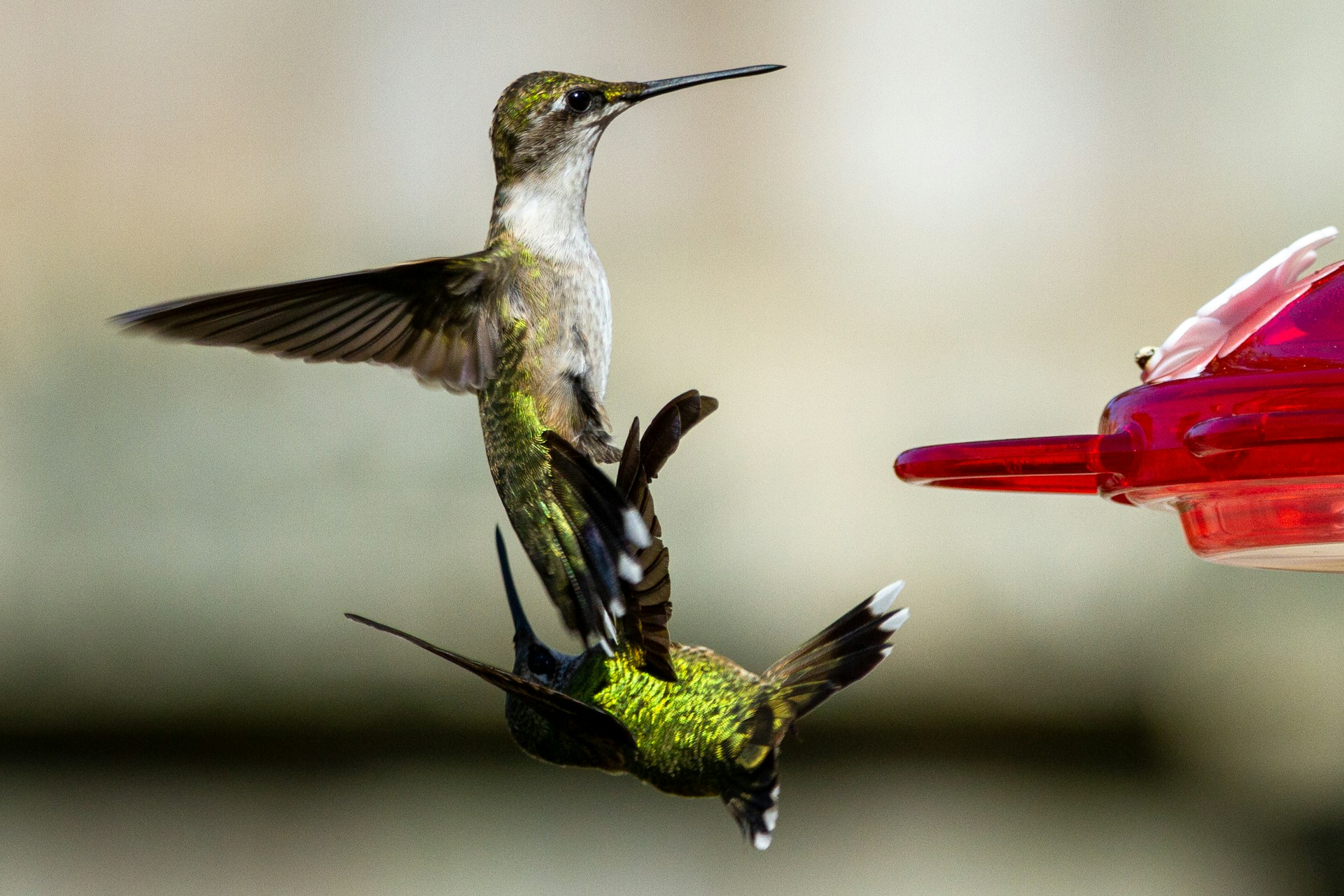
The energetic buzz and dazzling colours of hummingbirds are a welcome sight in any garden. However, the idyllic scene can often be punctuated by fierce aerial battles as these tiny titans fiercely defend their precious nectar sources. If you’ve witnessed the relentless chasing and aggressive skirmishes around your feeders, you’re likely wondering if there’s a way to foster a more harmonious feeding environment. The good news is, there are simple yet effective feeder tricks that can significantly reduce hummingbird squabbles, allowing more of these delightful birds to enjoy the sweet treat you provide and bringing a sense of peaceful coexistence to your vibrant garden.
Why Are Hummingbirds Aggressive?
Hummingbirds are fiercely territorial for a few key reasons, all tied to their high energy needs and feeding habits. Firstly, they have incredibly high metabolisms, among the highest of any warm-blooded animal. Their rapid wing beats and active lifestyle require a constant and significant intake of energy-rich nectar. Nectar is their primary food source, providing the necessary sugars to fuel their activity and so they need to feed frequently throughout the day to survive.

In their natural environment, hummingbirds feed on nectar from flowers, which are often scattered and have a limited supply, needing time to replenish. To ensure they have enough food, they instinctively defend patches of flowers that offer a good source of nectar. This innate territorial behavior extends to artificial feeders. Even though a feeder might offer a seemingly endless supply of sugar-water (when consistently refilled), the hummingbird’s instinct is to treat it like a valuable and potentially limited resource, much like a patch of nectar-rich flowers.
By defending a territory with a reliable food source, a hummingbird can minimize the energy spent searching for food and maximize the energy gained. It’s an energy-efficient strategy for survival. For males, controlling a good feeding territory can also be advantageous for attracting females. A male that can secure a consistent food source demonstrates his fitness and ability to provide, indirectly benefiting potential mates. Females also defend feeding territories to ensure they have enough resources to raise their young.
Millions of years of evolution have ingrained this territorial behavior as a survival mechanism. They haven’t evolved to understand that a human-maintained feeder is different from a finite natural flower. They view any concentrated source of nectar, whether it’s a patch of flowers or a feeder in your garden, as a valuable resource worth defending to ensure their survival and reproductive success.
Hummingbird Fights
Chasing is the most common tactic. The territorial hummingbird will fly directly at the intruder, often at high speed, chasing it away from the feeder and the immediate surrounding area. They may also hover above an approaching bird and then suddenly dive down towards it, often with loud, sharp chirps or buzzing sounds, to intimidate it.
In more intense encounters, hummingbirds may engage in brief but fierce mid-air clashes, sometimes even using their bills or feet to strike at the intruder. These fights are usually more about establishing dominance than causing serious harm. They will often emit rapid, high-pitched chirps, buzzes, and scolding calls to warn off other hummingbirds.
Lastly, territorial hummingbirds might puff up their feathers or display their gorget (the iridescent throat patch, especially in males) to appear larger and more threatening.

Here are some tips to reduce the fighting caused by the aggressive behavior of territorial hummingbirds.
Increase the Number of Feeders
The simplest and often most effective trick is to provide more feeders than there are dominant hummingbirds trying to control them. When there are ample food sources, the energy spent fighting becomes less worthwhile. Place the feeders so that they are not easily visible to each other. A dominant hummingbird can’t guard what it can’t see. Use trees, shrubs, fences, or even different sides of your house to create visual barriers between feeders.
Space Feeders Out Widely
If you have a large yard, spread the feeders far apart (at least 15-20 feet). This encourages different hummingbirds to establish their own feeding territories around individual feeders, reducing direct confrontations.

Consider Feeder Design
Choose feeders with multiple feeding ports, allowing several birds to feed simultaneously without being in direct competition for a single spot. Saucer-style feeders can be good for this. Some experts also suggest removing perches from feeders that are heavily guarded. The dominant bird often uses a perch to survey ‘its’ feeder. Without a convenient perch, it might spend less time guarding and more time feeding or moving on. However, other hummingbirds also appreciate perches, so consider this carefully.
Disrupt the Aggressive Hummingbird’s Vantage Point
Observe where the most aggressive hummingbird likes to perch to guard the feeder. Pruning that branch or removing the object can make it harder for them to maintain constant surveillance.
Provide Natural Food Sources
A garden full of nectar-rich native flowers will provide a more dispersed and abundant food source. This can reduce the hummingbirds’ reliance on the feeders and lessen competition there. Choose a variety of plants with different blooming times to offer continuous nectar throughout the season.
Consistent and Fresh Nectar
Ensure your feeders are consistently filled with fresh, high-quality nectar (1:4 ratio of white sugar to water, no dyes or honey). A reliable food source can sometimes reduce the need for aggressive guarding.

Observe and Adjust
Pay attention to which feeders are most contested and adjust their placement accordingly. You might need to experiment to find the optimal arrangement for your yard and the local hummingbird population.
Final Thoughts
The most common and generally most effective strategy to reduce fighting is to offer multiple feeders spaced widely apart or out of sight of each other. This dilutes the resource and makes it much harder for one bird to dominate all the feeding opportunities. Remember that some level of chasing is natural hummingbird behavior, but these tips can help create a more balanced and enjoyable feeding environment for a greater number of these fascinating birds.