As the peak heat of summer begins to temper, and the days, ever so subtly, start to shorten, a new chapter unfolds in the avian world across the United States. While spring and early summer are dominated by the bustling energy of courtship and early nesting, late summer brings a different kind of magic.
Many species that were once cloaked by dense foliage or absorbed in the quiet intensity of raising their first broods now become more apparent, some due to second nesting attempts, others as fledglings grow bolder, and a few simply because their habits make them more conspicuous this time of year. If you’ve felt a lull in your birdwatching, fear not! Late summer offers a unique opportunity to observe birds that might have eluded your gaze earlier in the season.
American Goldfinch

Why Late Summer
Goldfinches are late nesters, often waiting until thistles and other seed-bearing plants are abundant in mid-to-late summer to begin their breeding. This means their bright yellow plumage (for males) isn’t as prominently displayed during early summer courtship, and they’re focused on nesting within dense vegetation. However, as their nesting season peaks in late summer, you’ll see more adult males in their vibrant yellow, and soon, you’ll see fledglings, often a duller yellow-green, being fed by parents. They flock together more readily as they forage for seeds.
Where to Find Them
Thistle patches are their absolute favorite places in late summer. Goldfinches are primarily seed-eaters, and they rely heavily on thistle seeds for food and thistledown to line their nests. Look for fields that have gone to seed, especially with native thistles. They also forage on the seeds of plants from the aster family, such as coneflowers, zinnias, cosmos, black-eyed Susans, and cup plants. Another place to look for them is semi-open areas with a mix of trees, shrubs, and open, weedy ground. Look along woodland edges, roadsides, and areas of second growth. Orchards and cultivated land can also attract them.
And the best place of all to see them up close is, of course, your backyard! American Goldfinches are frequent visitors to feeders year-round. In late summer, keep your feeders stocked with Nyjer (thistle) seeds, black oil sunflower seeds, and native plants. Plant flowers that produce seeds they enjoy, such as zinnias, coneflowers, cosmos, asters, and milkweed.
Spotting Tips
- Plumage: Their fabulous golden coloring.
- Their “swoopy” flight: They have a distinctive undulating flight pattern.
- Listen for their calls: Their “per-chick-o-ree” or “potato-chips” call is quite distinctive and often given in flight.
- Observe their feeding behavior: They are quite acrobatic, often clinging to the stalks of plants to extract seeds.

Woodpeckers

Why Late Summer
While adult woodpeckers are year-round residents, active in their environment, their young are often tucked away in nest cavities during late spring and early summer. But by late summer, juvenile woodpeckers have fledged and are actively learning to forage. They might be a bit clumsier, more vocal, and less wary than adults, making them easier to observe. Their plumage can also look a bit different from adults, leading to fun identification challenges.
Where to Find Them
Mature Forests
This is prime woodpecker territory. Look for large, old trees, especially those with dead or dying branches, snags (standing dead trees), and fallen logs. These provide both food sources (insects) and nesting/roosting cavities.
Mixed Deciduous and Coniferous Forests
Many woodpecker species thrive in a mix of tree types. The Pileated Woodpecker likes distinctive, large, rectangular holes in dead trees.
Wooded Swamps and Riparian Areas
Areas near water with ample trees can be particularly good, attracting a variety of species.
Forest Edges and Open Woodlands
Some species, like Northern Flickers, often forage on the ground in more open areas near woods. The Red-bellied Woodpecker is also widespread in deciduous woodlands and semi-open habitats.
Suburban and Urban Parks/Woodlots
Even in developed areas, if there are mature trees, you can often find common species like Downy and Hairy Woodpeckers, and Red-bellied Woodpeckers.
Spotting Tips
- Listen for drumming and calls: Woodpeckers are often heard before they are seen. Their drumming is a territorial display or communication, and their calls can vary from sharp “pik” notes to whinnying sounds.
- Look for signs of foraging: Rectangular holes, bark flaking, or sap wells (small, often symmetrical holes in rows) on tree trunks are good indicators of woodpecker activity.
- Focus on dead or dying trees: These trees are often teeming with insects, a primary food source for most woodpeckers.
- Visit National Parks and Wildlife Refuges: These protected areas often have excellent birding trails and healthy populations of various bird species, including woodpeckers.
- Go during cooler parts of the day: Early mornings and late afternoons are generally best for bird activity in late summer.

Green Heron

Why Late Summer
Green Herons are masters of camouflage, often blending seamlessly into dense marsh vegetation. They are also relatively shy and solitary, especially during early breeding. While always a bit reclusive, late summer often sees fledgling young learning to fish in more open areas, and adults might be more focused on catching food for growing broods, leading them to be slightly less cautious. Their unique “neck-stretching” posture to blend in is a sight to behold.
Where to Find Them
Green Herons love small, shallow bodies of water. This includes ponds, streams, creeks, ditches, marsh edges, and even suburban park lakes. They also prefer areas with trees, shrubs, and tall marsh grasses along the shoreline, which provide cover for hunting and nesting. These attractive herons are adaptable and can be found in a variety of aquatic environments, including estuaries and mangrove swamps in coastal areas.
Spotting Tips
- Go at dawn or dusk: Like many herons, they are often most active during these times.
- Look in shaded areas: They often hide in the shadows along the water’s edge.
- Be patient and observe quietly: Their secretive nature means you might need to wait for them to reveal themselves.
- Listen for their call: A sharp “kyow” or “skeow” is a good indication they are nearby, even if you can’t see them.
- Scan for movement: Look for subtle movements in the vegetation or a sudden lunge into the water.
- Check low branches overhanging water: They often perch here to hunt.

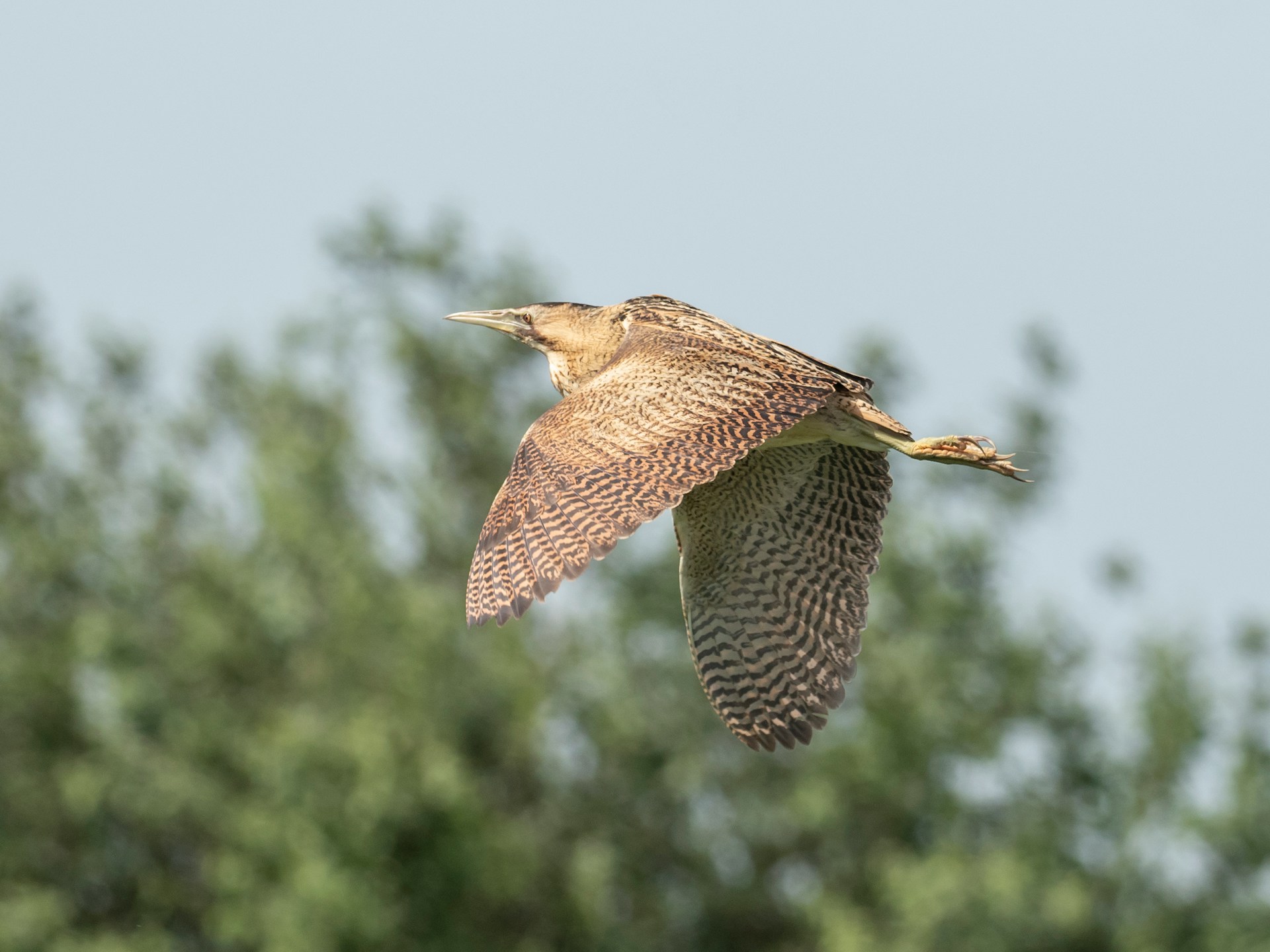
American Bittern

Why Late Summer
This marsh bird is perhaps the most secretive of all, known for its incredible camouflage and “stake-out” posture where it points its bill skyward to mimic reeds. It’s booming “oong-ka-choonk” call in spring is often heard, but the bird itself is rarely seen. While still extremely challenging to find, late summer can offer slightly better chances as juveniles are out and about, and the need for food for growing young might make adults slightly more active in their foraging. Their migration also begins to pick up in late summer, potentially increasing their visibility in suitable habitats.
Where to Find Them
The primary habitat of the American Bittern is dense freshwater marshes. Look for large, shallow wetlands with extensive stands of cattails, bulrushes, and tall grasses. Managed wetlands and wildlife refuges often provide ideal habitat and may have observation platforms or boardwalks that allow for better viewing opportunities without disturbing the birds.
Spotting Tips
- Patience and Stealth: Bitterns are masters of camouflage. They will often freeze with their bill pointed skyward to blend in with reeds. Scan slowly and carefully along the edges of open water and dense vegetation.
- Dawn and Dusk: While they can be active during the day, they are often most active and vocal at dawn and dusk.
- Use good optics: Binoculars and a spotting scope are essential for scanning dense vegetation.
- Visit local wildlife refuges and wetland parks: These areas are designed to protect wetland habitats and often have facilities (boardwalks, observation decks) that improve your chances.
- Be patient: This is not a bird you typically just stumble upon. Dedicate time to quietly observe a suitable habitat.

Shorebirds (early southbound migrants)

Why Late Summer
Many shorebird species breed in the Arctic or far northern regions of the U.S. and Canada, so they aren’t present in most of the continental U.S. during early summer. For many shorebirds, late July and August mark the beginning of their southbound migration. This means you’ll start seeing a variety of species that were absent or very rare earlier in the summer. Many of these will be juveniles on their first migration.
Where to Find Them
Exposed mudflats at low tide are incredibly important. They teem with invertebrates (worms, insects, mollusks) that shorebirds feed on to rapidly replenish energy reserves for their long migrations. Salt marshes will then provide crucial roosting habitat for shorebirds during high tide when mudflats are submerged. They also offer foraging opportunities.
Sandy beaches, particularly those with wrack lines (accumulations of seaweed and debris), can be good for certain species like Sanderlings and Ruddy Turnstones, which forage along the surf.
Inland wetlands and water bodies like sewage lagoons can also be explored. When water levels are low, these often provide abundant invertebrate prey and excellent viewing opportunities. Conversely, flooded fields (especially rice fields or agricultural fields), particularly in areas like the Central Valley of California can also be productive and can attract a wide variety of shorebirds.
Spotting Tips
- Tides are Key (Coastal Areas): For coastal mudflats and estuaries, check tide tables. The incoming mid-tide is often ideal as the rising water pushes feeding birds closer to the shore, concentrating them for better views.
- High Tide: Birds will often leave the mudflats to roost in nearby salt marshes, sandy beaches, or even dry fields. This can be a good time to find large, resting flocks.
- Early Morning/Late Afternoon: As with most birding, these times often offer the best light and activity, and less human disturbance.
- Spotting Scope: Highly recommended for shorebird identification. Many subtle field marks (bill shape, leg color, plumage details) are only visible with a scope. You’ll be glad you have one.

Final Thoughts
From heron to goldfinch, there are many birds that are more visible in late summer. It requires a different kind of birding in many cases. You may need to do more research into suitable habitats, travel to specific locations, and consider the time of day more carefully. You may also see fewer birds altogether and spend a lot of time observing quietly. The upside is the incredible feeling you get when you see an American Bittern standing stock still in the reeds with its neck stretched skyward, or a family of woodpeckers working a series of trees, or even a rare shorebird mingling in a flock of sandpipers. The effort is undoubtedly worth it!