

Birds with red heads aren’t rare, but they always feel like a special find when we spot one.
While red isn’t the most common color in the bird world, several familiar species wear it beautifully. The Northern Cardinal, Scarlet Tanager, and Summer Tanager are among the best-known “red birds” of eastern North America. For many species, that vivid crimson shows up most strongly on the head.
In most cases, these bright highlights help males catch the eye of potential mates. Let’s take a closer look at 15 of these striking red-headed birds!
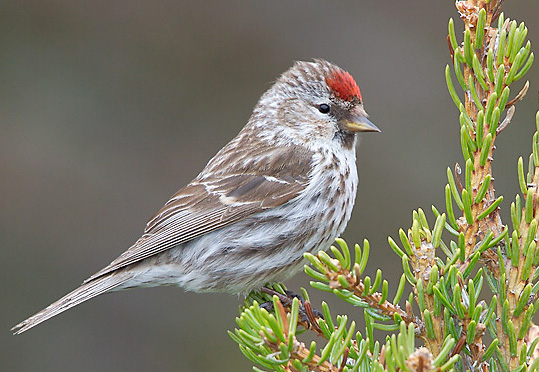
Common Redpoll
Photograph © Glenn Bartley.
The Common Redpoll is a small finch with a short yellowish bill. The male has a bright red patch on his crown, a little black on the face and throat, and pink coloring on the underparts. His back is frosty gray with dark streaks, and the wings are mostly black with some white markings.
The female looks similar but has a smaller, darker red patch on the head and no pink on the breast.
Common Redpolls nest in the far north in brushy areas. In winter, they move south into Canada and the northern United States, where they gather in flocks and feed in weedy fields.
Acorn Woodpecker
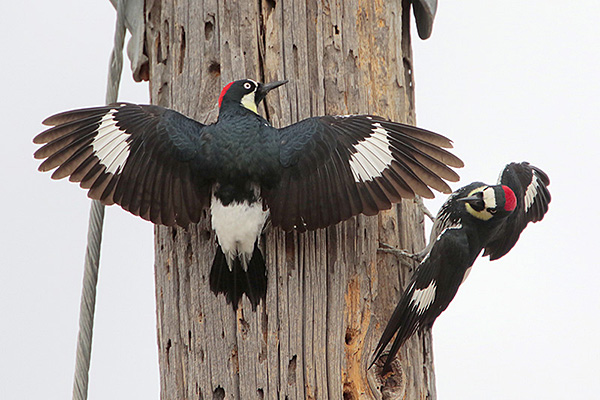
The Acorn Woodpecker is a medium-sized bird, easy to spot thanks to the red patch on its head. On males, the red covers the top and back of the head, while on females it’s smaller and limited to the back.
Both sexes share the same glossy black body, a pale face and throat, and whitish underparts streaked with black on the breast. When they fly, the white rump and large white wing patches stand out clearly.
As their name suggests, Acorn Woodpeckers live in oak woodlands. They are found from Oregon down through California, and also in parts of Arizona, New Mexico, western Texas, and south into Mexico.
Western Tanager
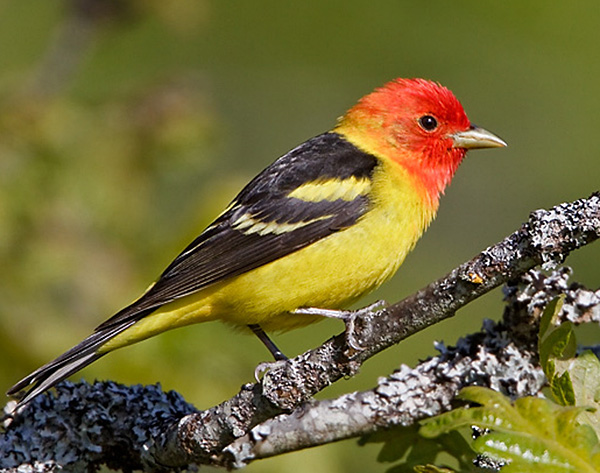
Western Tanager (Piranga ludoviciana) perched on a branch in Victoria, BC, Canada.
The Western Tanager is a striking bird with a red head and bright yellow body. Males have a rose-red crown and face that blends into orange-red as it meets the yellow neck and underparts. They also show a yellow rump, black back, wings, and tail, along with two pale wing bars—the upper yellow and the lower white.
Females look much plainer. They are mostly olive and yellow with darker wings, a grayish back, and no red on the head.
Western Tanagers spend summer in coniferous forests and oak woodlands across western Canada and the western United States. In fall, they migrate south to Mexico and Central America, where they spend the winter.
Pyrrhuloxia
Photograph © Greg Lavaty
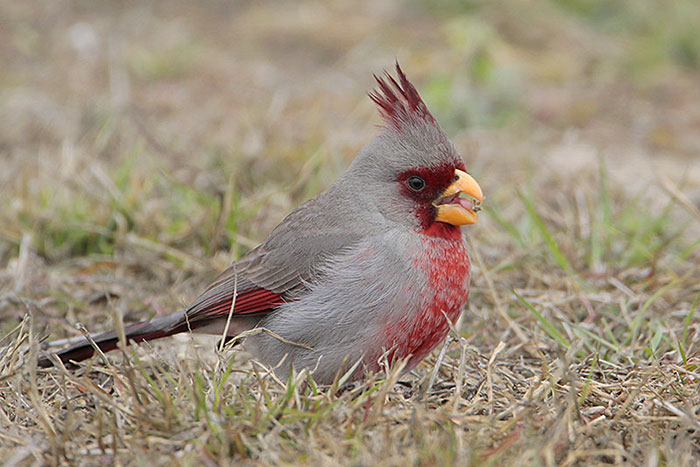
The Pyrrhuloxia, often called the Desert Cardinal, is a gray, crested finch-like bird with a short, yellowish bill. The male stands out with rose-red highlights running from his face down the chest and belly to the undertail, a striking contrast against his ashy-gray body. His crest, wings, and tail also glow with deep red.
Females are more subdued, mostly grayish-brown with touches of dull red on the crest, wings, and tail.
Pyrrhuloxias live in dry habitats across southern Arizona, southern New Mexico, western and southern Texas, and into Mexico. Their mix of soft grays and flashes of red makes them one of the most colorful birds of the desert.
House Finch
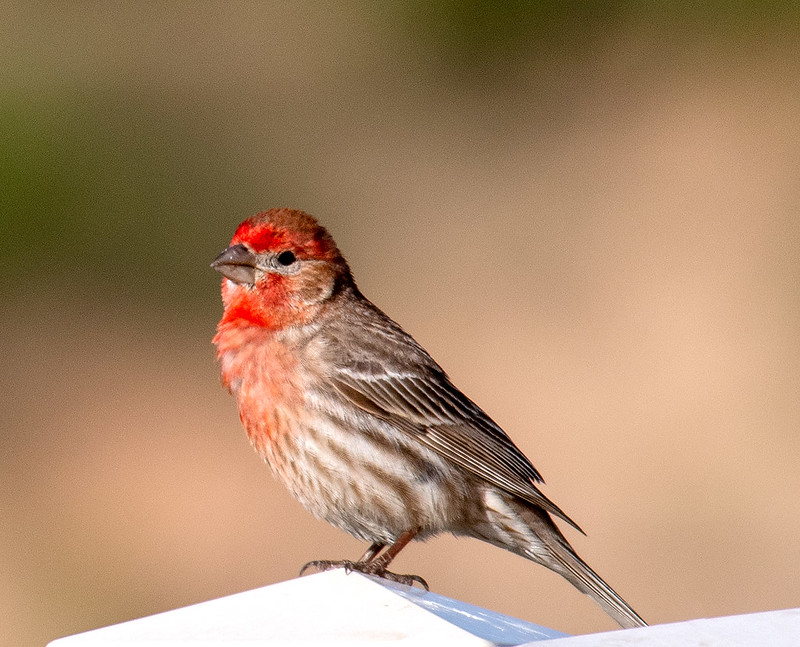
© John Hansen
The male House Finch is a small, sparrow-like bird with a red head and breast that looks almost strawberry-colored. Some males appear more red-orange, but all have a gray, conical beak, pinkish-red highlights on their gray-brown backs, and streaked pale bellies.
Females lack the red and are more subdued, showing a brownish-gray face and streaked underparts that blend into their surroundings.
House Finches are common in cities, suburbs, and dry open areas. They range across much of the eastern and western United States, parts of southern Canada, and Mexico, making them one of the most familiar backyard birds in North America.
Vermilion Flycatcher
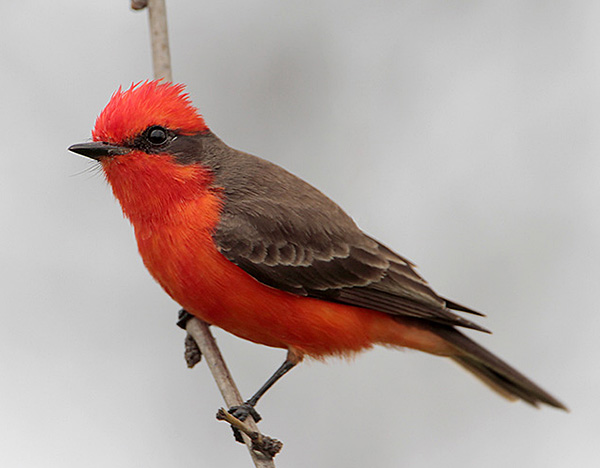
The male Vermilion Flycatcher is a small, fiery bird with a red head and belly that seems to glow in the sunlight. His crown and face shine bright scarlet, while the belly is more orange-red. A narrow black mask, black bill, and dark upperparts with a touch of white in the wings make the red stand out even more.
Females are much plainer, mostly gray above with streaks on a white breast and a soft pink wash on the belly and undertail. Young birds look like females but often show yellow instead of pink.
Vermilion Flycatchers are found in brushy areas and along rivers from California across the Southwest to Texas, where their flashes of red brighten dry landscapes.
#9 Red-faced Warbler
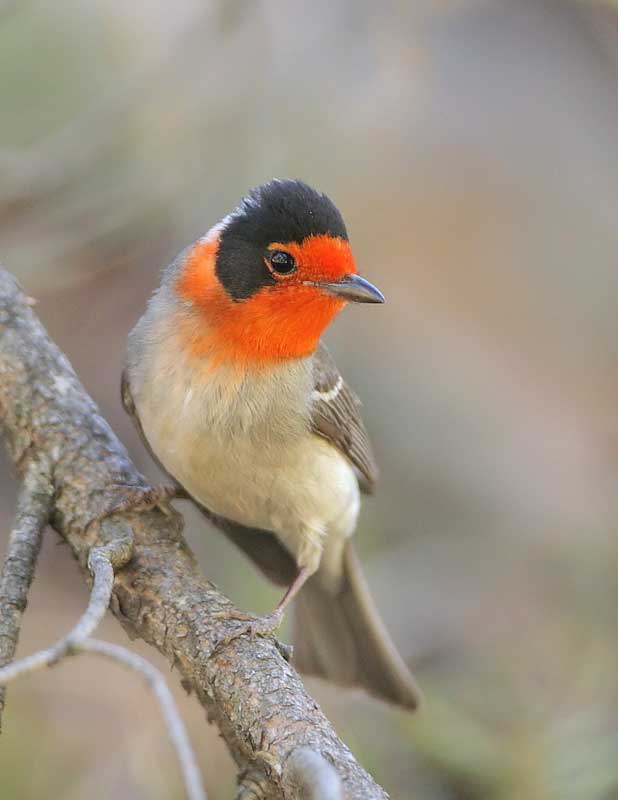
The Red-faced Warbler is a small gray songbird with a striking red head and throat that stand out like a splash of candy color. The vivid red contrasts sharply with a black crown and black along the sides of the face. A small white patch on the back of the head and another on the rump add to its distinctive look.
The rest of the plumage is simple: gray upperparts and mostly white underparts. Males and females look similar, though females are usually a bit duller. Young birds show a softer, pinkish-red on the head instead of the adults’ bold crimson.
Red-faced Warblers breed in the cool evergreen forests of the mountains in Arizona, New Mexico, and Mexico. Their brilliant heads make them one of the most easily recognized warblers of the Southwest.
#8 Downy Woodpecker
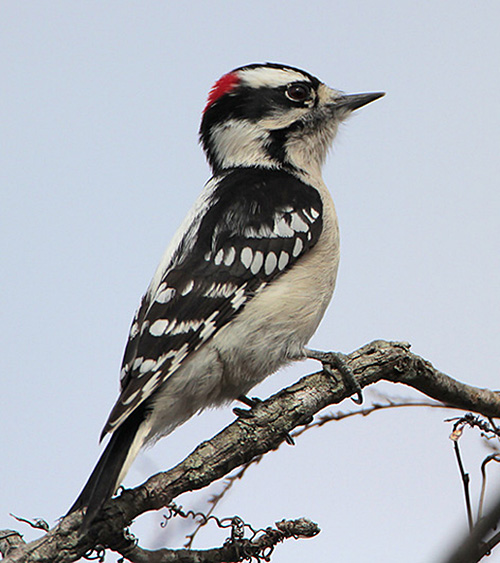
Photograph © Greg Lavaty.
The Downy Woodpecker is the smallest woodpecker in North America. Males are black and white with a bright red patch on the back of the head, a short pointed bill, white underparts, and a large white patch across the back.
Females look nearly the same but lack the red spot. Both sexes have a black-and-white tail, with small black marks on the outer feathers.
Downy Woodpeckers are common visitors to backyard feeders, as well as parks, gardens, and woodlands across most of the United States and Canada. They’re missing only from the far north and the arid southwest.
Red-bellied Woodpecker
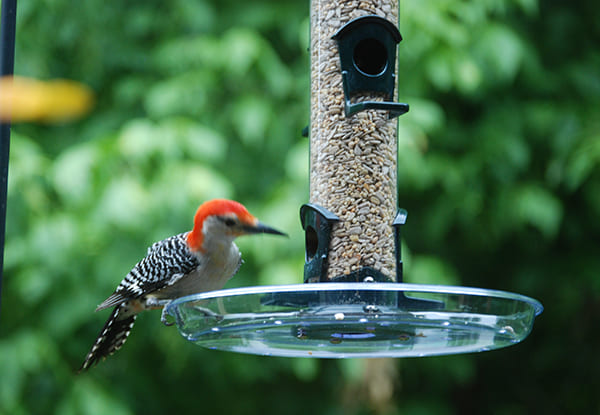
The Red-bellied Woodpecker is a medium-sized bird with a red head that is easy to recognize in eastern woodlands. Males show a bright red crown and nape, a reddish-orange spot above the bill, and a gray face. Their underparts are mostly gray, with a small red-orange patch low on the belly that gives the species its name.
Females look similar but have less red, limited to the nape. Both sexes share black-and-white barring across the wings and back, a white rump, and a patterned black-and-white tail. Young birds have gray heads or just a touch of orange on the nape.
Red-bellied Woodpeckers are common throughout wooded areas of the eastern United States and into southern Ontario, where their loud calls and striking plumage make them hard to miss.
Red-crested Cardinal
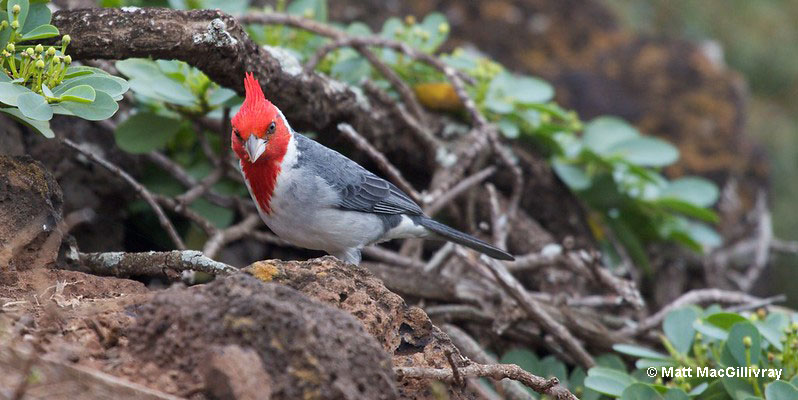
The Red-crested Cardinal is a striking bird with a tall, crimson crest and bright red on the face and throat that extends to the upper breast. The rest of its plumage is simple but elegant—gray above, white below, and a pale, conical bill that completes its sharp look.
Males and females look alike, while young birds are duller, showing orange-brown on the crest and head instead of red.
Native to South America, Red-crested Cardinals are found in tropical shrublands from Bolivia to Argentina. They were also introduced to Hawaii, where they have become common visitors to feeders and gardens.
Redhead
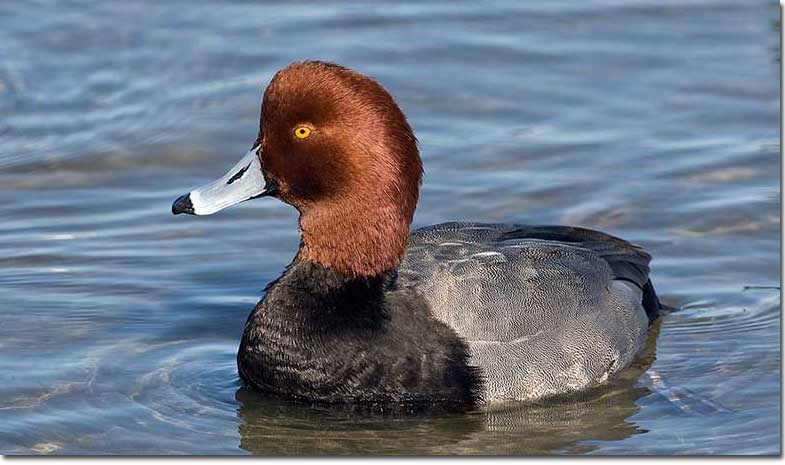
The Redhead is a medium-sized duck named for the male’s glossy, chestnut-red head. Males also have yellow eyes, a pale blue-gray bill with a black tip, a mottled gray back and flanks, and solid black on the breast, rump, and under the tail.
Females are plainer, mostly tawny brown with pale buff markings on the head and a dark gray bill tipped with black.
Redheads breed in lakes and wetlands across Alaska, the central plains, and western North America. In winter, they move south to the southern and eastern United States and into Mexico, where large flocks gather on coastal bays and inland waters.
Cassin’s Finch
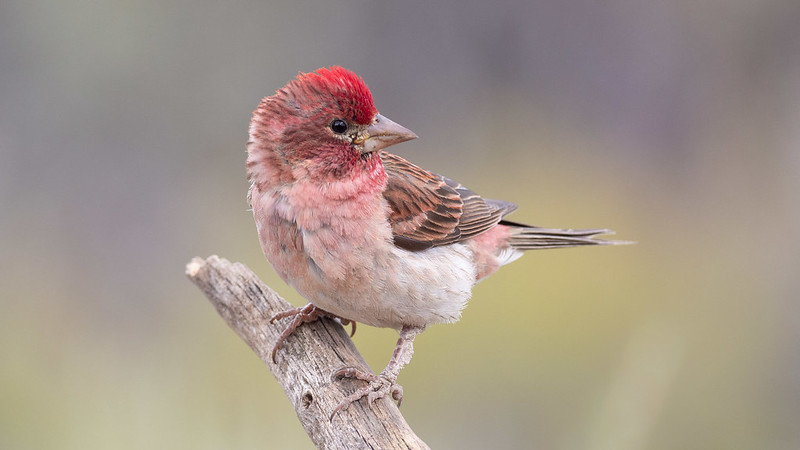
Cassin’s Finch. © David Renwald
The Cassin’s Finch is a sparrow-sized songbird with a rosy touch that sets it apart. Males show a bright rose-red cap along with pinkish-red on the face, breast, wings, rump, and tail. They also have a few dark markings on the face and a clean white belly, giving them a sharp, colorful look.
Females share the same sturdy, pale bill and long wings but lack the red. Instead, they are gray-brown above and white below with heavy streaks across the chest and sides.
Cassin’s Finches are most often found in dry coniferous forests of the Rocky Mountains and other parts of western Canada and the United States. In winter, they may move to lower elevations or head south into Mexico, sometimes gathering in flocks with other finches.
Red-breasted Sapsucker
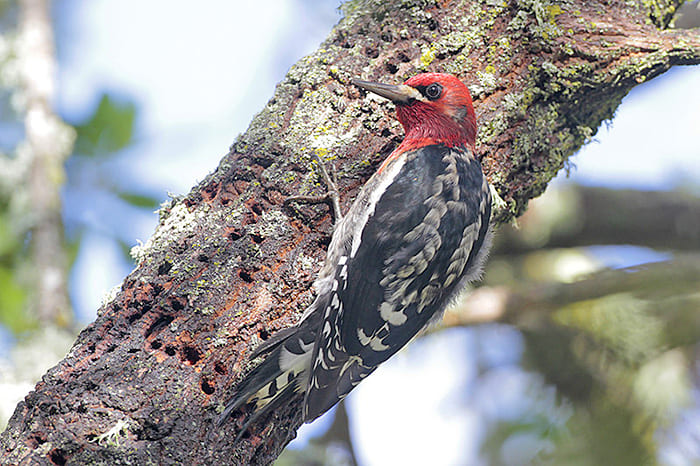
The Red-breasted Sapsucker is a small to medium woodpecker and an unmistakable bird with a red head and breast. Its deep red face and throat stand out against black-and-white mottling on the back, a white rump, and a bold white wing patch. A pale yellow wash runs across the belly, adding even more color.
Males and females look alike, though females sometimes show more white on the face. Young birds are duller, with sooty-brown heads and breasts instead of red.
Red-breasted Sapsuckers live along the Pacific Coast, from southern Alaska through California and into parts of Nevada, where they are most often found in coniferous forests.
Pileated Woodpecker
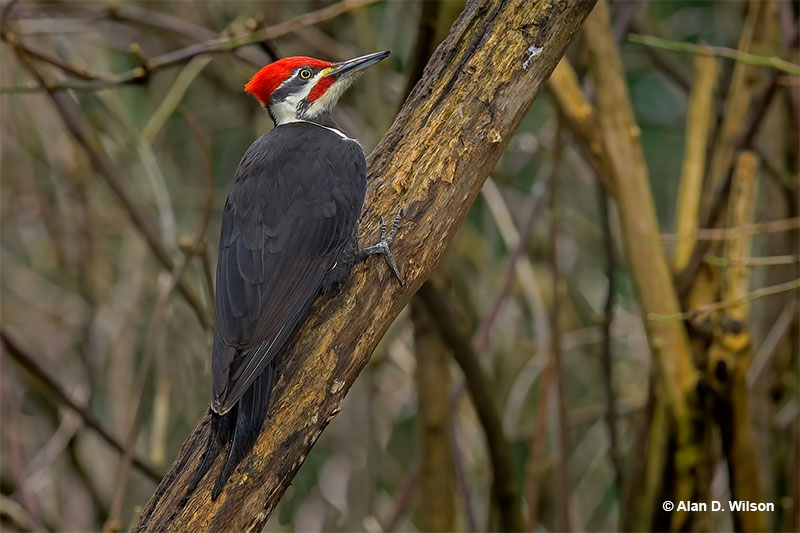
The Pileated Woodpecker is a crow-sized bird with a red head and tall, pointed crest that makes it easy to recognize. Males have a full crimson crest, a red moustache mark, and bright red across the top of the head. Females also show red on the crest, but it’s smaller and they lack the male’s moustache stripe.
Aside from the red, these woodpeckers are mostly black with bold white on the neck, face, and under the wings.
Pileated Woodpeckers live in mature forests across much of Canada, the Pacific Northwest south to California, and in woodlands east of the Great Plains. Where forests remain, they are common, noisy, and hard to miss as they hammer away at dead trees.
Red-headed Woodpecker
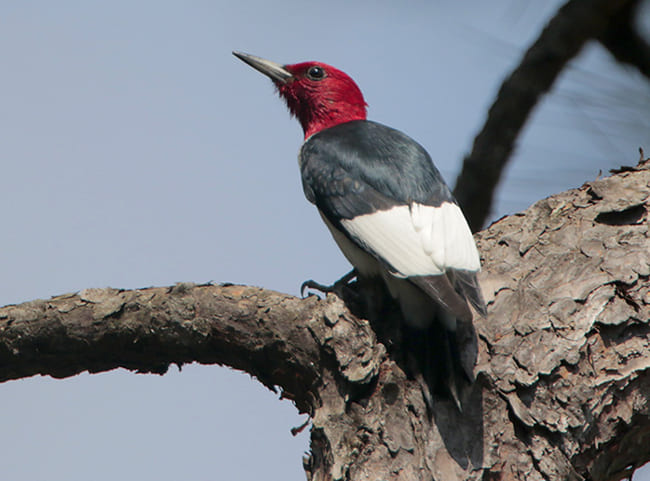
The Red-headed Woodpecker is a robin-sized bird with a red head that shines like velvet. The deep crimson contrasts beautifully with its glossy black back and bright white underparts, making it one of the most striking woodpeckers in North America.
Males and females look alike, both showing the same bold pattern with a big white patch in the wings and white on the rump. Young birds share the same layout of markings but lack the red, with brown heads and gray-streaked underparts instead.
Red-headed Woodpeckers live in open oak woodlands, scattered groves, and park-like landscapes from the Great Plains eastward to New York and Florida. Their bold colors and strong presence make them easy to spot wherever they occur.
Conclusion
From tiny finches to crow-sized woodpeckers, these birds with red heads bring flashes of color and character to forests, fields, and even backyards. Some, like the House Finch, are everyday neighbors, while others, like the Red-faced Warbler, feel like rare treasures tucked away in the mountains.
Whether the red crown is for attracting a mate, defending territory, or simply standing out, these birds remind us how diverse and vibrant nature can be. Keep your eyes open—you never know when a splash of red might brighten your day.