
Ah, the eternal struggle! Squirrels are clever and persistent and just love bird seed. We have all seen the videos of their acrobatic antics as they traverse washing lines, tackle obstacles, and fly through the air to reach the tasty treats of a bird feeder. Today we take the challenge of outsmarting them. Here are 10 effective ways to keep squirrels away from your bird feeder.
The Baffle Barrier
Sometimes, it’s the simplest ideas that work the best. A baffle is a barrier that prevents the squirrel from reaching the feeder. There are several different types and you can spend a lot of time and money on them. If you are feeling creative, then you can even make your own.
Firstly, there is the cone-shaped baffle that you place on the feeder pole. It should prevent the squirrel from climbing any higher. You must get one that is big enough.
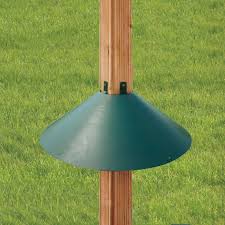
Next up is the over-feeder baffle. This is a large cone that is fixed above the top of the feeder and stops the squirrel from climbing across whatever the feeder is hanging from. It creates a smooth, slippery surface that squirrels can’t grip. It is also helpful in that it gives some protection to the feeder from rain.

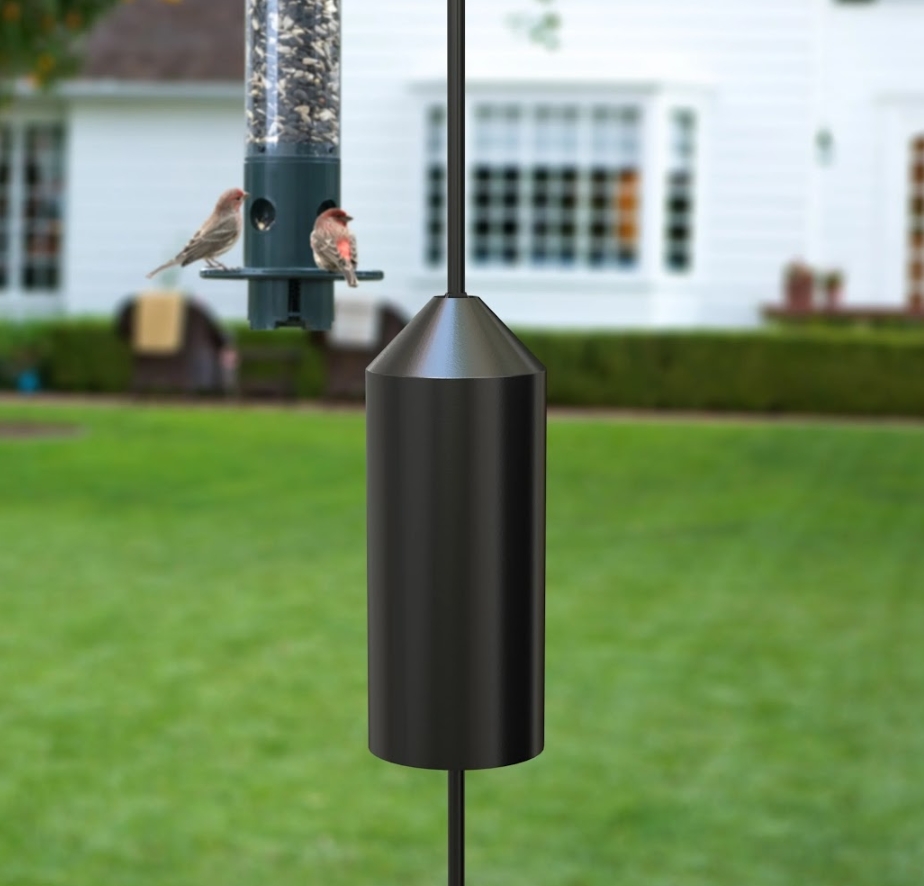
This is my favorite, named the Torpedo Baffle, made of powder-coated steel! You really could spend a lot of money on these. It does look very attractive though.
The most comical kind of baffle is the hanging baffle. It is a large, slightly sloping corrugated sheet that sits above the feeder. It is another slippery surface that the squirrels can’t get past.

These baffles are effective but there will be some trial and error in order to ensure the squirrel can’t work its way around the barrier. They must be installed correctly and be a large enough size. Our advice is to make your own to see what is likely to be most effective before you buy a manufactured baffle.
Location, Location, Location
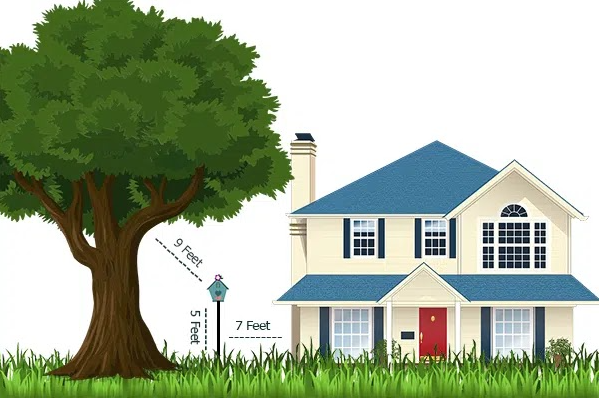
Pay attention to the Rule of 5-7-9. Place your feeder at least 5 feet off the ground, 7 feet away from trees or other structures they can jump from, and 9 feet away from anything they can launch themselves from (like a roof).
Squirrels are good jumpers, but they have their limits. These distances make it much harder for them to reach the feeder. They will also benefit the birds as these distances still provide enough cover and safety for them when feeding.
Squirrel-Proof Feeders
These feeders are designed with features that make it difficult or impossible for squirrels to access the seed. Here are a couple of examples.
Weight-Activated Feeder
These feeders have perches or platforms that are designed to collapse or close off access to the seed when a certain weight is applied. Birds are light enough to trigger it, but squirrels are too heavy. They are very effective at deterring squirrels and can be used with a variety of seeds.
However, as these are mechanical feeders, they can be more expensive than other options and may well need maintenance. There have been instances where squirrels have learned to hang from the feeder without putting weight on the perch.

Cage Feeders
This simpler feeder is surrounded by a cage with openings large enough for birds to pass through but too small for squirrels. It is easy to use and install and you can get them for different types of feeds.
While this cage may deter most squirrels, some may still be able to reach through the bars. It may also limit the size of birds that can access the feeder. That could be an advantage or disadvantage depending on your target birds.

The Slinky Surprise
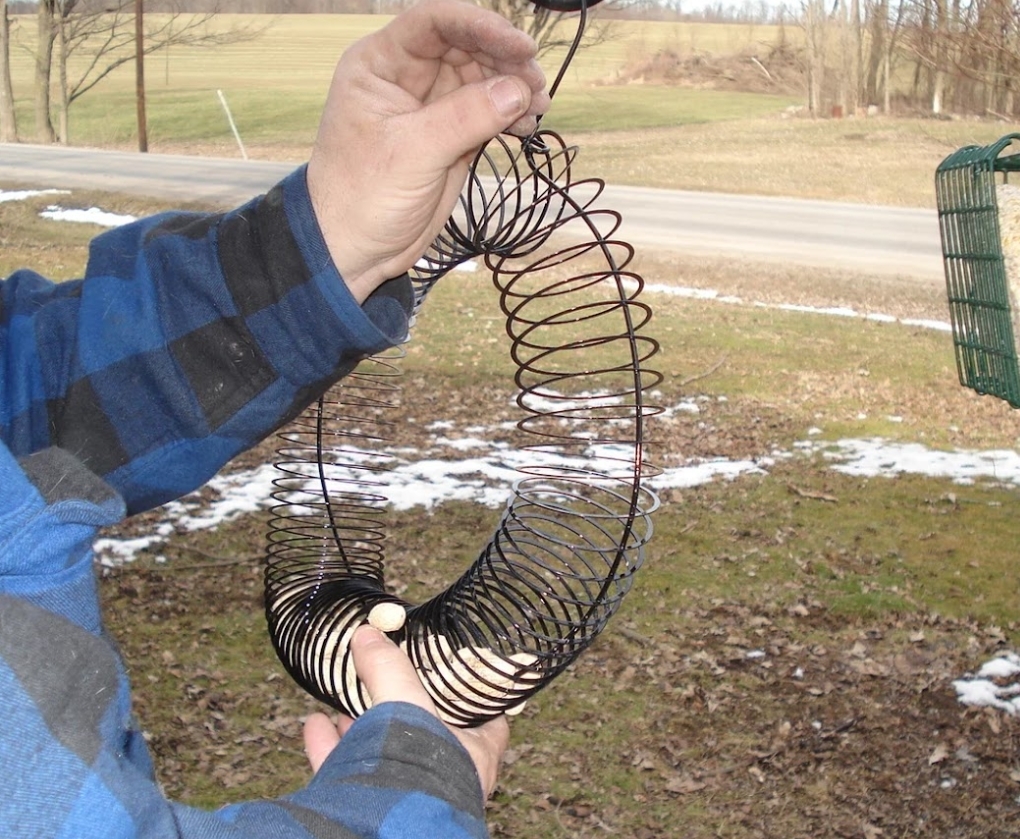
This home hack is ingenious. Simply thread a Slinky toy onto the feeder pole below the feeder. When a squirrel tries to climb, the Slinky will move and they’ll slide back down. This easy and very cheap trick is surprisingly effective and fun to watch! Make sure the Slinky is long enough and the pole is smooth.
Seed Selection
You can always try changing what you feed the birds if you really can’t keep the squirrels away. Seeds like Safflower can be very effective as birds like it but squirrels don’t! These innocuous seeds have a naturally bitter taste due to compounds in their shells. While birds don’t seem to mind this bitterness, squirrels, with their more sensitive taste buds, find it unpalatable. They generally prefer sweeter, nuttier flavors.
They also have a tough outer shell that can be difficult for squirrels to crack open. While some determined squirrels might eventually manage, they often find it’s not worth the effort when there are easier food sources available.
While safflower seeds are nutritious, they may not offer the same balance of fats and carbohydrates that squirrels crave. Squirrels tend to prefer foods with higher fat content, like nuts and acorns.
So, a bird seed mix that is high in Safflower seeds might do the trick.
Spicy Solutions
Capsaicin is the chemical compound that gives chili peppers their characteristic “heat.” It’s produced by the pepper plant in its fruit, particularly in the white pith surrounding the seeds. If you have really determined squirrels, try this. Birds can’t taste it, but squirrels hate it! You can add cayenne pepper or hot pepper flakes to your birdseed (be careful not to get it in your eyes!). There are also commercially available “squirrel-proof” bird seeds with capsaicin added.
The Obstacle Course
These are now famous (or infamous, depending on your viewpoint) for providing hours of backyard entertainment. What started as DIY attempts to prevent squirrels from reaching the bird feeder, has now become an industry and source of entertainment for millions and just shows how incredibly agile and smart these little furry creatures are.
Seriously though, if you want to flex your creative muscle then try using plastic soda bottles or sections of PVC pipe on the wire on either side of the feeder. These create an unstable surface that squirrels can’t easily navigate. How creative you get after that is up to you.
Cleanliness is Key
It is just common sense that bird feeders need to be clean. Old bird seed will go moldy quickly in the outdoor setting of your garden. That can make birds sick. But just as important is the area around the feeder. I remember being surprised and horrified when I tended to a neglected feeder in my garden to find a mushy carpet of rotten, half-sprouted seeds all around the base. It is really simple: spilled food will attract a range of unwelcome critters to your garden. Rodents and squirrels may clean up the mess before it goes rancid but then they will be back for more.
Bird feeders should be cleaned every time they are refilled and so should the area around them.
Give Them Their Own Feast
Well, if you can’t beat them ….
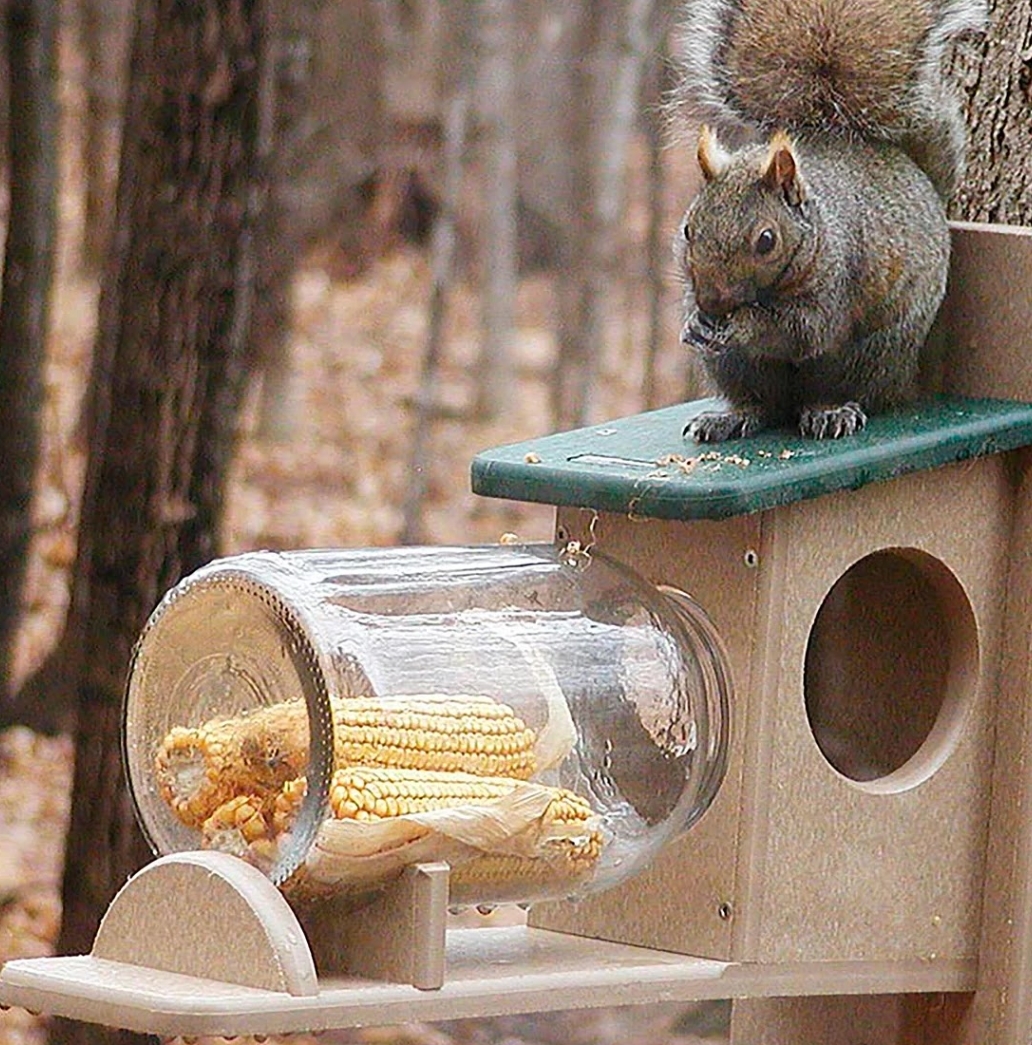
Chances are that if you love birds, then you love all animals. It does seem a bit unfair to feed one type of animal but not another. If you enjoy having squirrels in your garden then try providing a separate feeder specifically for squirrels, located away from your bird feeder. Fill it with things they love, like peanuts or corn. Sometimes, giving them an easy food source will distract them from your bird feeder. Then you get to enjoy all the animals in your backyard.
Persistence and Patience
Squirrels are smart and they will test your defenses and look for weaknesses. Be persistent in your efforts and be prepared to try different methods until you find what works best for you. Be mindful that they are entitled to be in your garden as well as the birds. Don’t use traps or anything that will harm them and also avoid using sticky substances like grease or Vaseline on feeder poles. These can be harmful to birds.
Final Thoughts
Good luck in your battle against the squirrels! With a little creativity and persistence, you can protect your bird feeder and enjoy watching your feathered friends in peace.